


Two editions ago I mentioned that a WASP Clay 3d printer/plotter had arrived in the studio. Well…
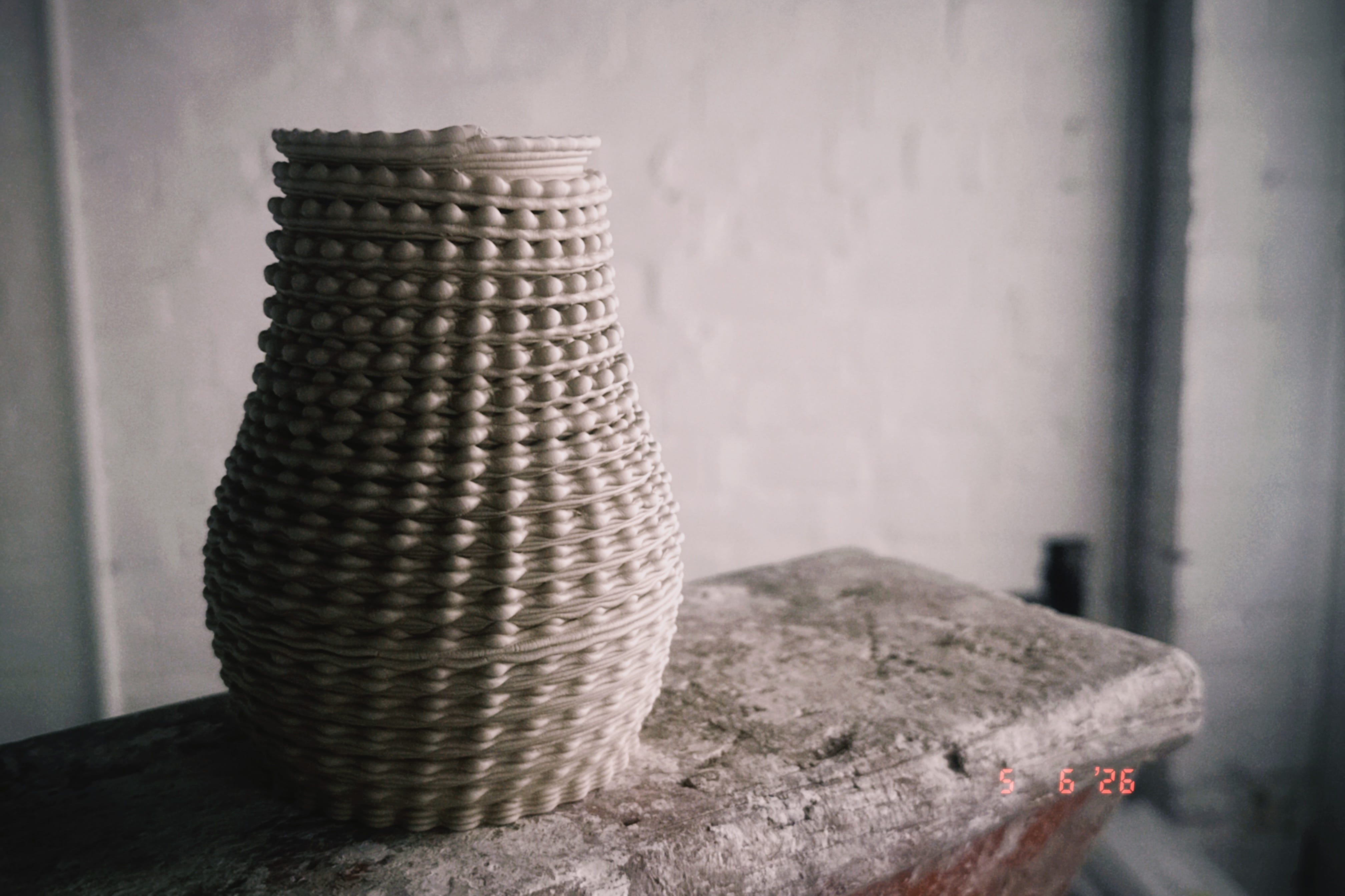
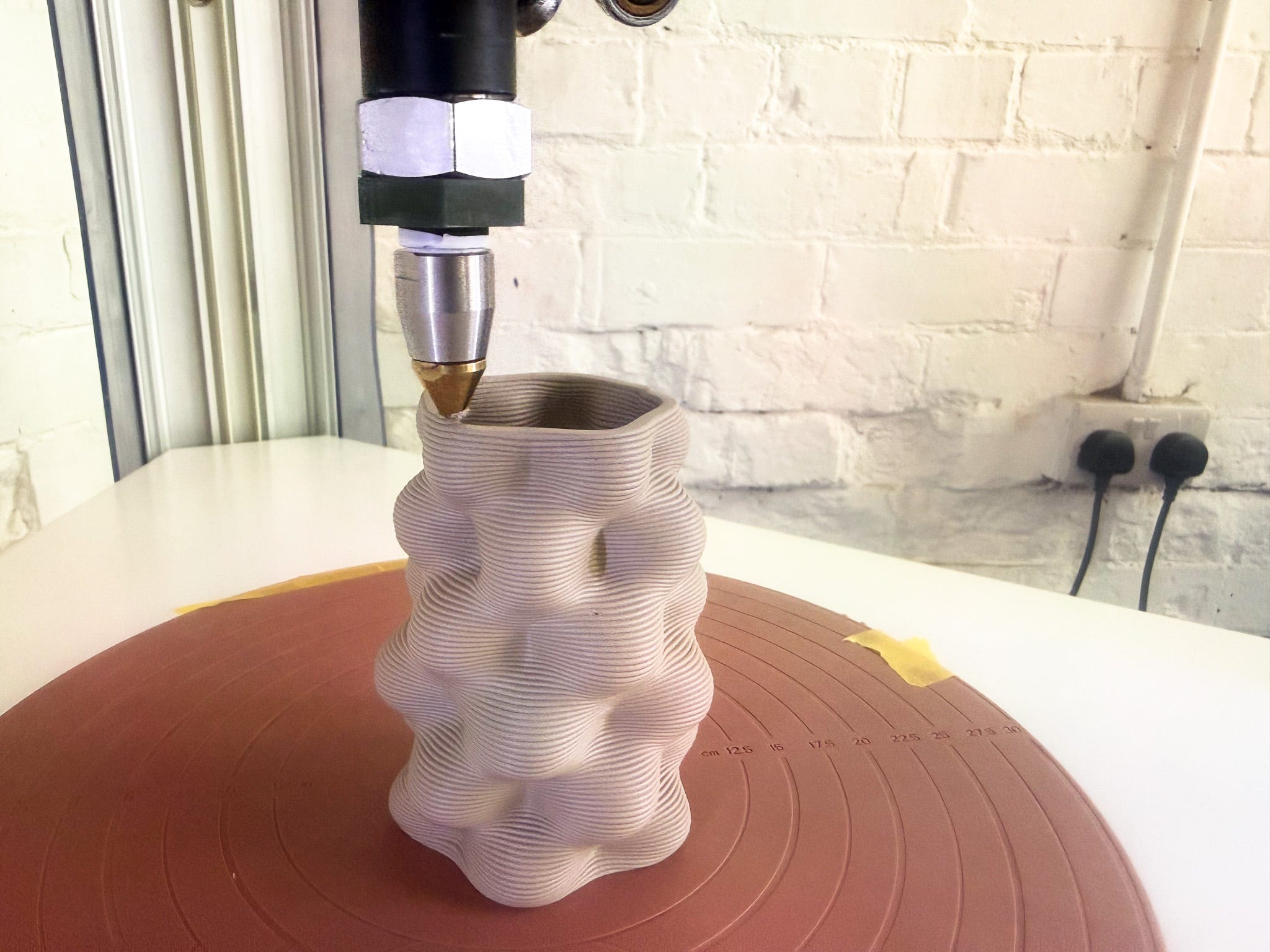
…let’s just say it’s a lot of fun!
I think it’s also fair to say that if you already write code to create designs for a drawing machine you’d find modifying that code to write-files-for/control-a clay plotter incredibly easy.
I am not about to embark on becoming a potter, I already have enough on my plate without introducing a whole new thing. But having said that, the machine does just live downstairs, and after Kris has finished using it there will be spare clay that has to be used up, and I now have these files laying around.
I did however, create a tool that would let me preview the GCODE to get an idea of what something would look like before I sent it.
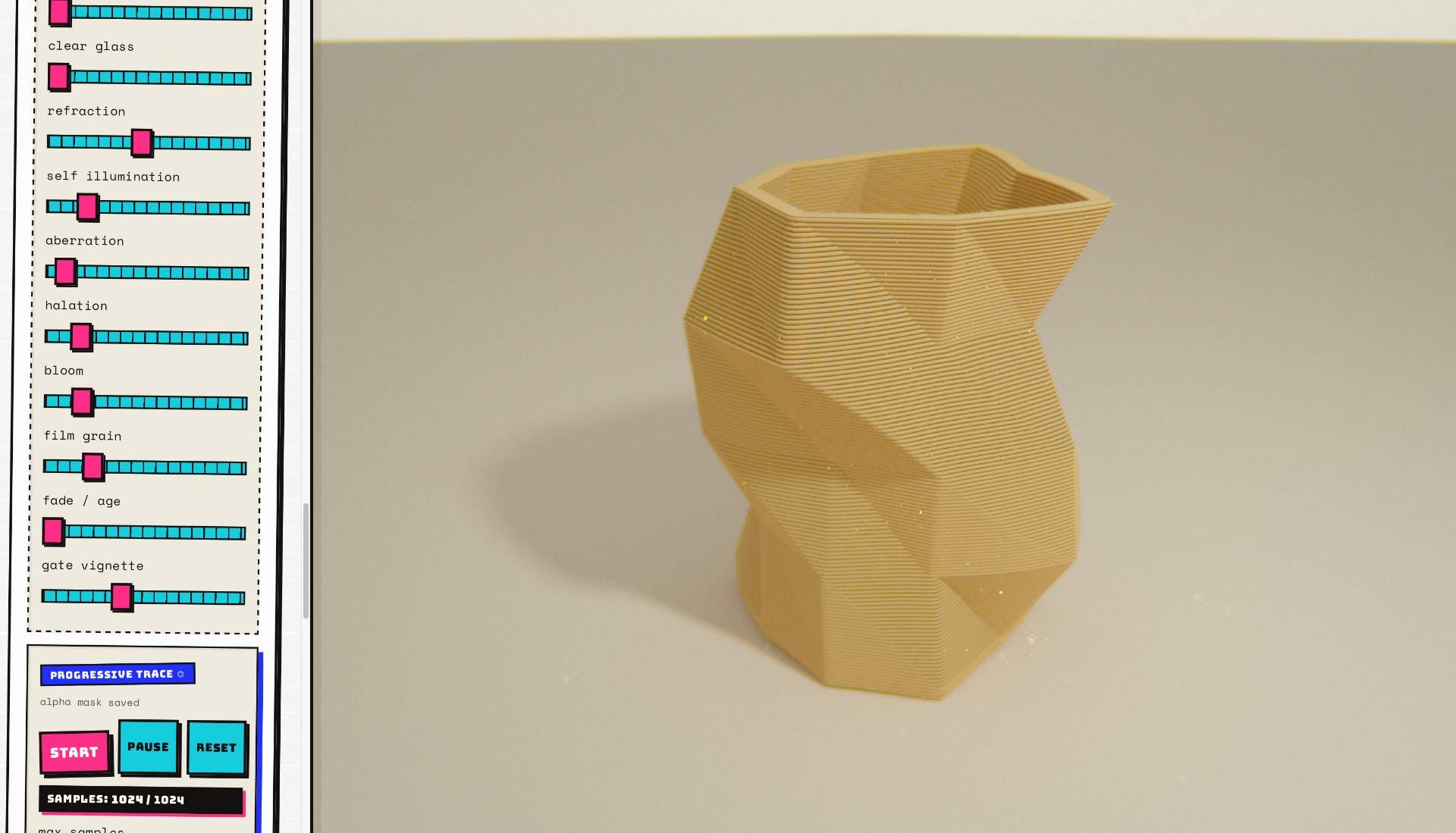
The last time I wrote a ray-tracer was back at Uni about 30+ years ago. Coming back to it now, the maths is still pretty much the same. I got it working but I also managed to create something so bad that it actually ran the battery down on the laptop while it was plugged in. Something I didn’t even know was possible.
And then things got weird.
# LINKS
“UUNA TEK 3.0 is the most frustrating hardware/software combo I’ve ever bought”
Father’s day coming up, buy them a pen plot artwork from one of these artists
A FAVOUR ABOUT ARCHIVES & DEATH
Meanwhile, I have a favour to ask, two actually, about the same thing.
We - Deep Keep - made a thing called KeepRight (I’ll quickly write why & the background in a moment), it’s about creating a “declaration” about what you’d like to happen to an item, archive, collection after you’re no longer responsible for it (i.e. dead, but not always), and not necessarily your own stuff.
1️⃣ 1️⃣ 1️⃣
So the first favour is about questions.
With a collection/archive of things in mind; physical, digital, mixed, yours, other peoples’, go through the process of creating a declaration for it: https://keepright.info/declaration - we kept it deliberately short to start with, should take like 3mins.
Then let me know (or via the usual channels) what questions we are missing. I’m looking for blind-spots and how it didn’t (or did) work for the things you had in mind.
2️⃣ 2️⃣ 2️⃣
Second favour is for the super technical people, and I’m not totally sure anyone will do this but here we go.
There’s a specification for what the questions are, for how they are asked, and finally for the shape of the saved results - and a bunch of schemas too.
That can all be found here: https://github.com/Deep-Keep-Group/keepright-spec and there’s a more human readable write up all about it here: https://keepright.info/building
If you’re into specs, schemas, systems, extendability, transportability and/or longevity/data retention, or know someone who is can you give me a once over on where I’m being a fucking idiot, or if it all makes sense.
I’ve done the internet, technology, code and development for years, but even backed by all that this is the first spec/schema I’m putting together for the big-wide-world and while I think it makes sense, a second pair of (human) eyes is always good.
💾 💾 💾
The very (very) quick why; we did a whole bunch of stuff with Flickr and archives of people’s photos. We recognised that what we learnt (more on that on the flickr dot org blog; lots of research lots of workshops) extended beyond that, and there were some juicy problems to solve around keeping shit around for a long time (hence setting up Deep Keep).
But it became super obvious that we needed a small layer in front of just “keeping stuff for a long time” - i.e; context, intention, provenance, governance - that sits alongside copyright (or lack of), and can be printed out and stuffed into a folder/shoe box, kept digitally for humans/machines, or both.
For people here that may be; “what do I want to happen to my art/art-collection when I die?”
Thank you for doing the above and/or forward this request to someone you think may have opinions!
# EVERYTHING EVERYWHERE ALL AT ONCE
I am not a potter, I am a print guy. I love having an A2 printer full of various tones of archival ink and draws of archival paper - almost as much as I love stationery.
I also half own a Riso print studio.
Having a tool that previews GCODE for what a pot may look like, that uses Threejs and webgl gives me access to all the “normals” - which is a shortcut to “how much is this 2d point on the canvas (calculated from a 3d point) pointing towards or away from the light”; i.e. how light or dark is this point.
Which means in addition to the ray traced image, you can get all fancy-pants and throw on a halftone effect…
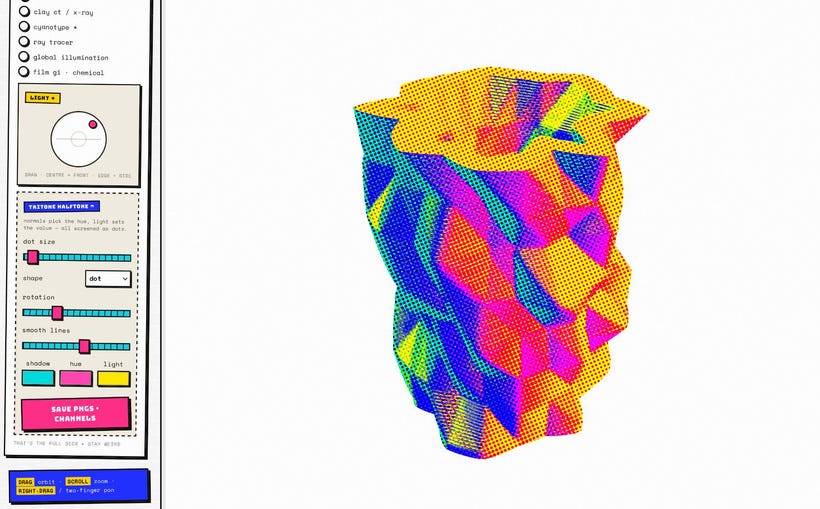
…which you can separate out into different print channels…
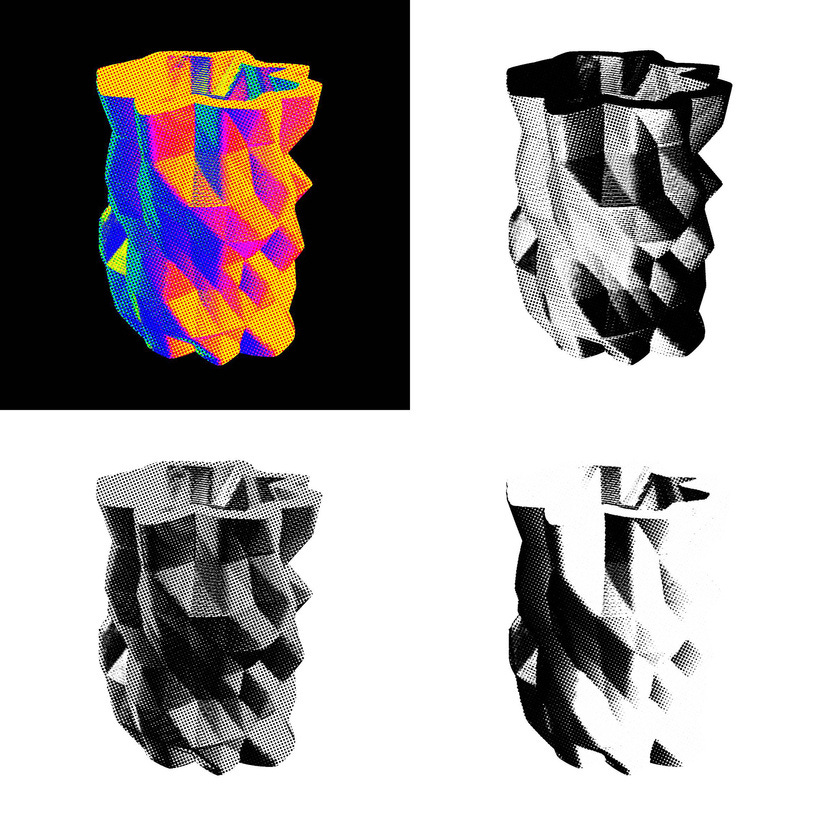
…and then load up into your Riso Studio software to check the colour plates, layout and levels.
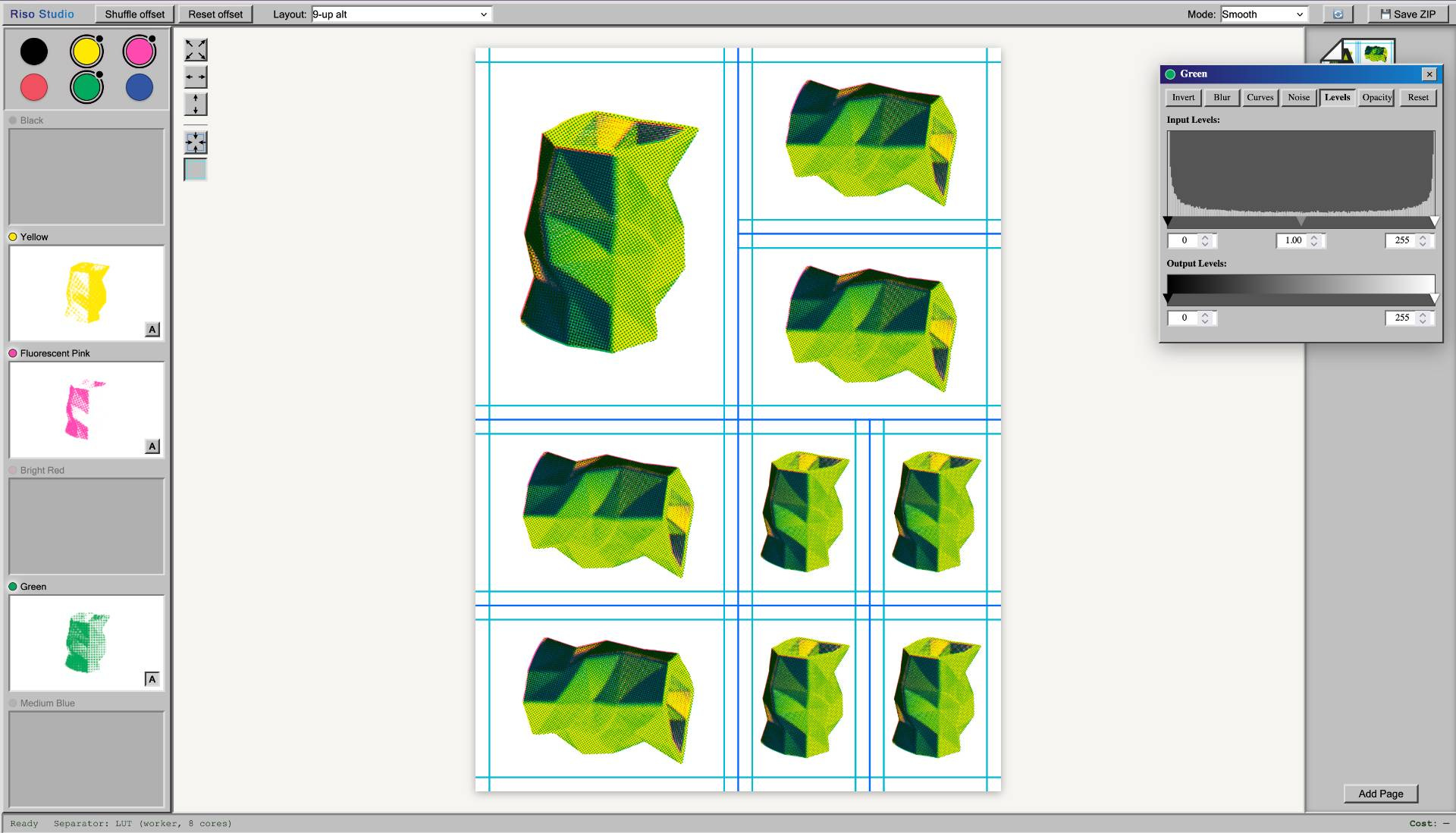
Then, you can add the ability to rotate the pot and save out X number of “frames”, to be sent to the Riso printer (and normal printer)…
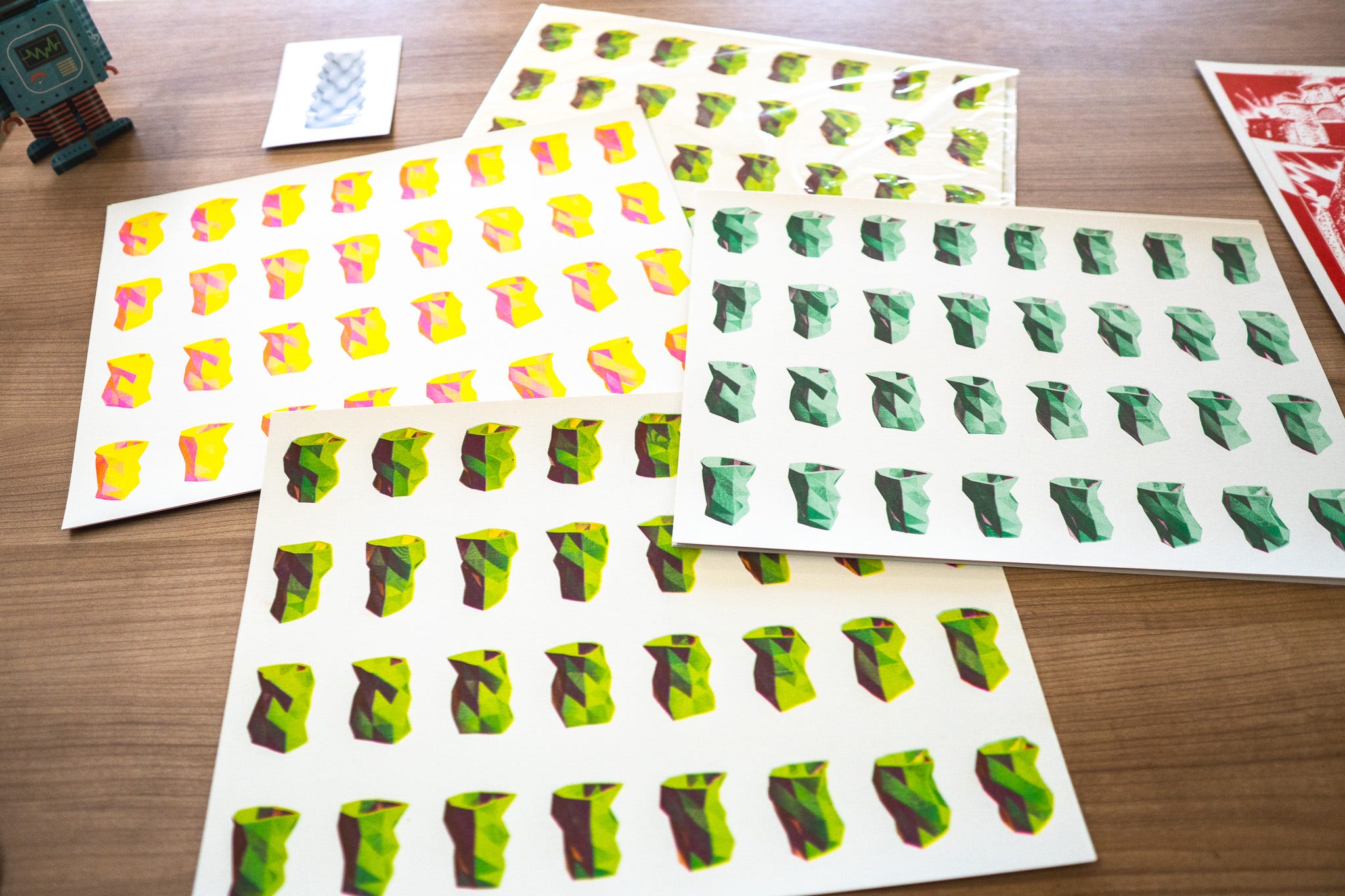
…but also all the matching SVGs needed for the drawing machine.
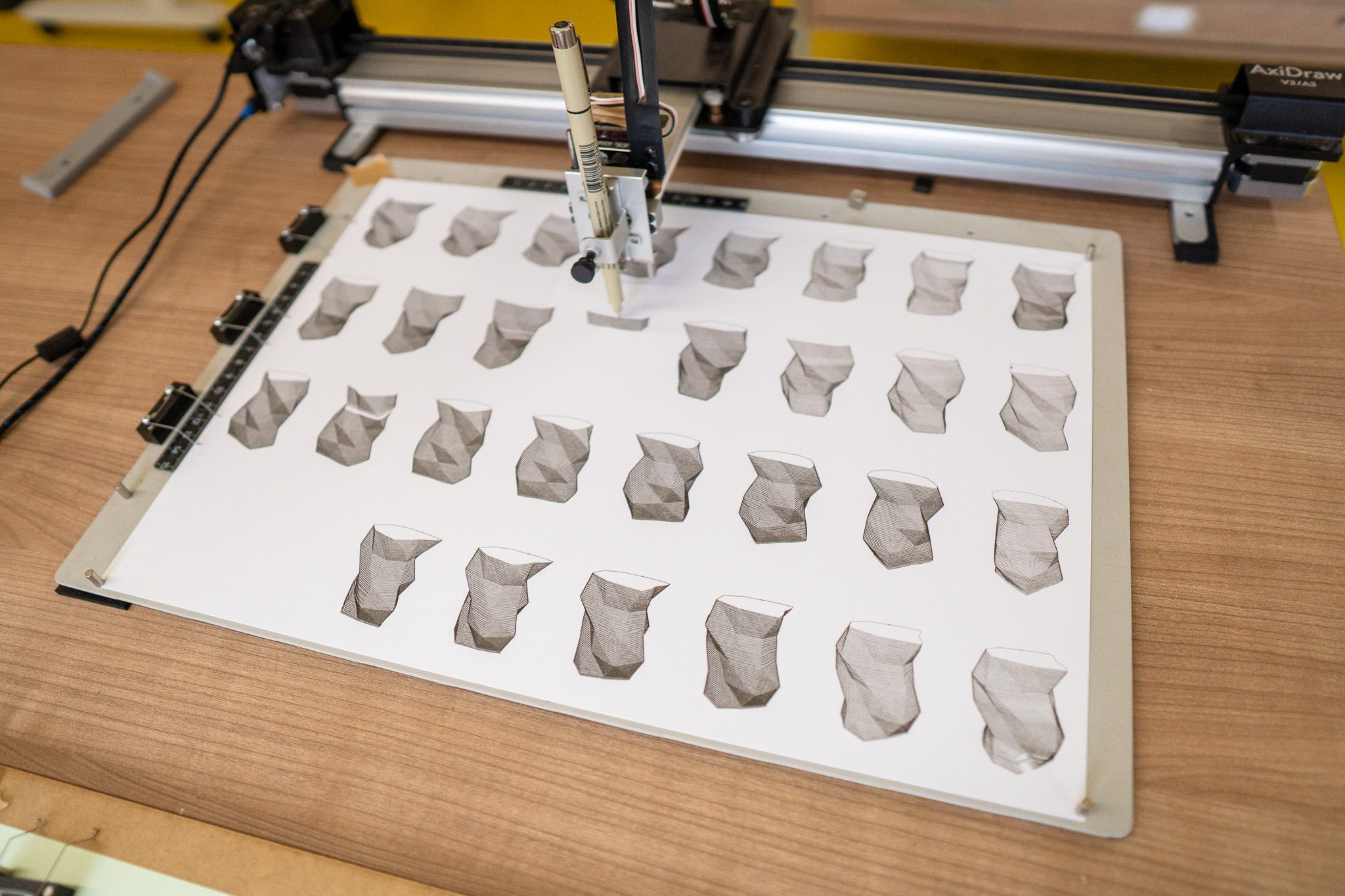
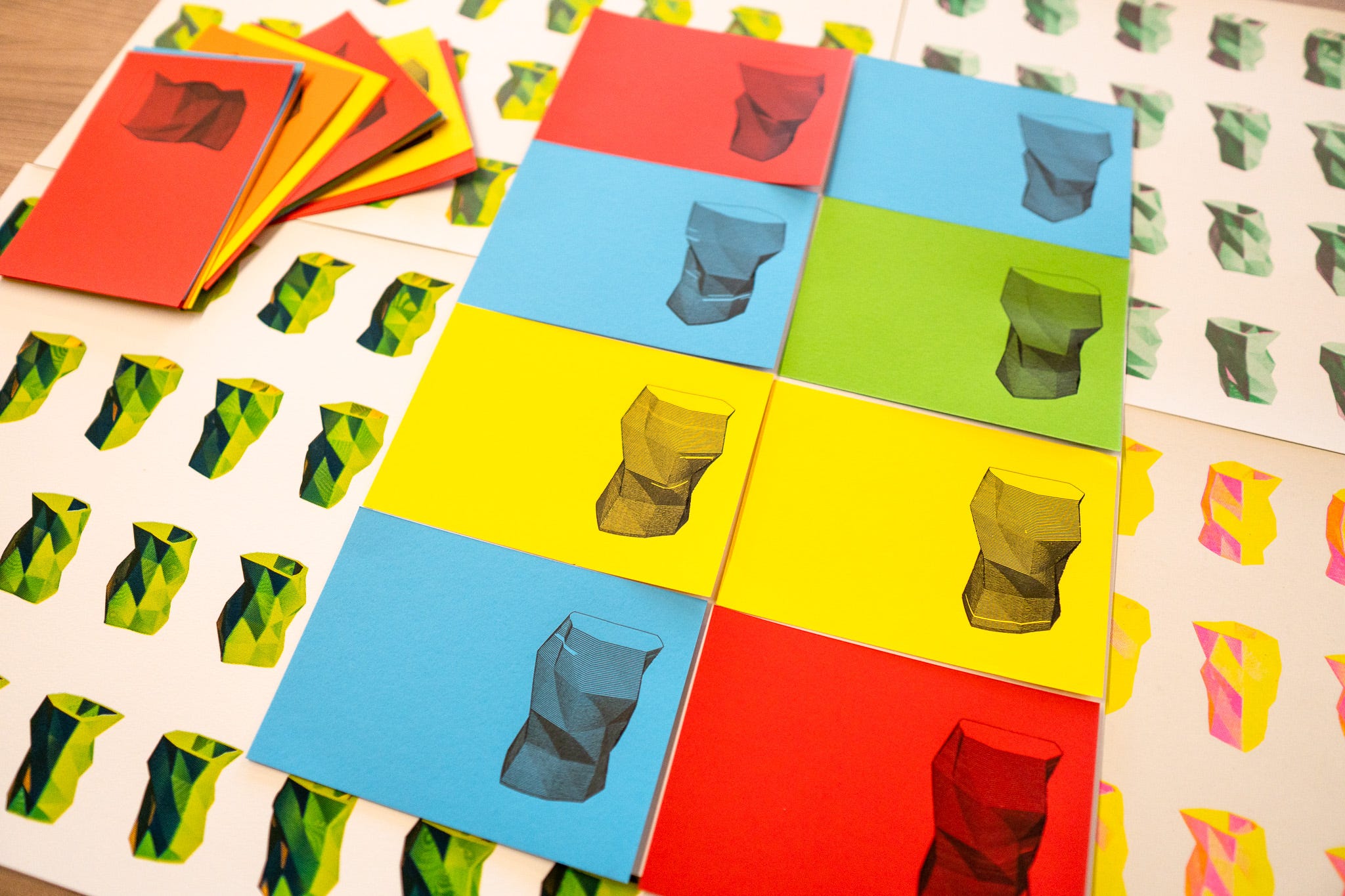
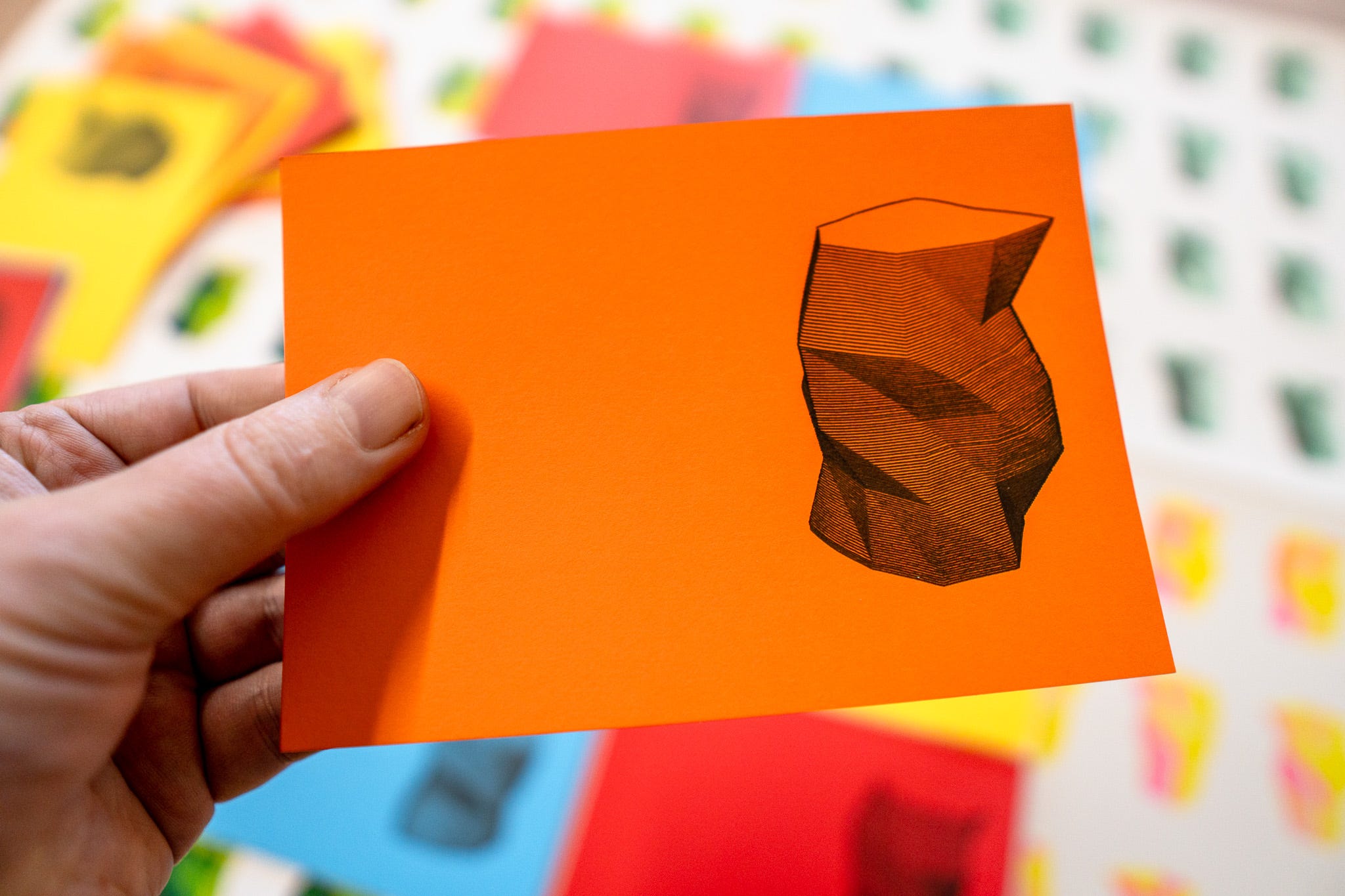
So now I’m in the slightly overwhelming position of being able to use a souped up version of my drawing machine code to design pots, vases and perhaps teapots, that can be '“printed/plotted” in clay as an actual real 3d object to be fired and glazed, but also Riso printing, Giclée printed and drawn with whatever pen/pencils/brush etc you want.
# THE END, DOUBTS & SOCIAL PROOF
Spotted this the other day from Applied Craft.
Which looks great, I haven’t used it, and anything that brings down the barrier to entry is good. I can especially get behind the “yeah, this GCODE part is specifically written for me” bit.
It’s also a bit of an odd feeling for me. I’ve spent so long putting off, and then starting to make the Drawing Machine 101 tutorials, that I can feel the relevance of them slipping away as AI develops.
I don’t know how Applied Craft has developed the software, but the UI has the rounded generated with AI look about it, which is fine. And we’re at the point that if someone wants to create a pen plot drawing they don’t need to know how to do that, or even use someone else’s tool or software to do it, they can just ask AI.
Which brings me back to; why the hell am I making videos teaching people how to code things that AI can build for them in minutes?
And I think the answer is two fold.
1. Code as Craft - potters still make pots, people still write letters with fountain pens, typewriters are being meticulous repaired.
2. Social Proof - in the future, when I’m making drawing machine art, and someone inevitably says “that was created with AI” or “that was vibe coded” I’ll have a playlist of 40 or so videos of me hand writing code step by step from start to finish, and YouTube videos that predate AI showing my work, that I can point to.
It’s like keeping public sketchbooks in a way, and I’m glad I did it, and continue to do it.
On that note, the next handcrafted newsletter will be with you on Thursday 25th June, 2026, all typos are mine, and I’ve used ‘-’ instead of ‘—’ all the way through, sorry typographers!
Love you all
Dan
❤️
I'd add
3. Making as Understanding Creation - frictionless processes don't inscribe lasting knowledge.