


# SUPERGRAPHICS
Let me point you towards Supergraphics
https://hepcatshaven.wordpress.com/2015/07/21/1974-supergraphic-system/
Not to be confused with Supergraphics the book.
# STAMPY STOMPER
If I may I’d like to invite you to the second half of last week’s #Weeknotes video.
Substack can be a bit weird about jumping to a set time, so here the link to jump to 7m 48s https://www.youtube.com/watch?v=o_4fjVgFhN4&t=468s
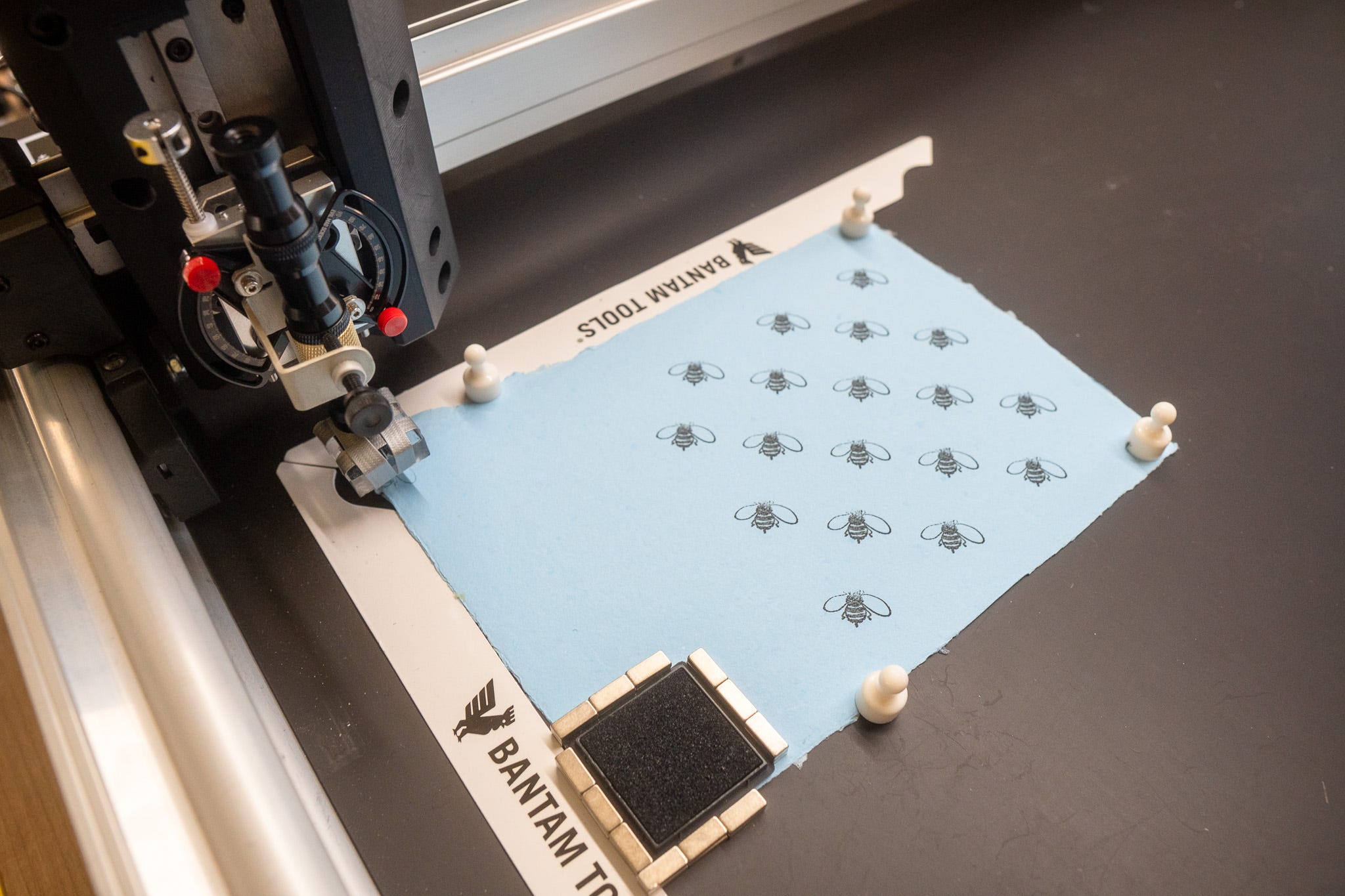
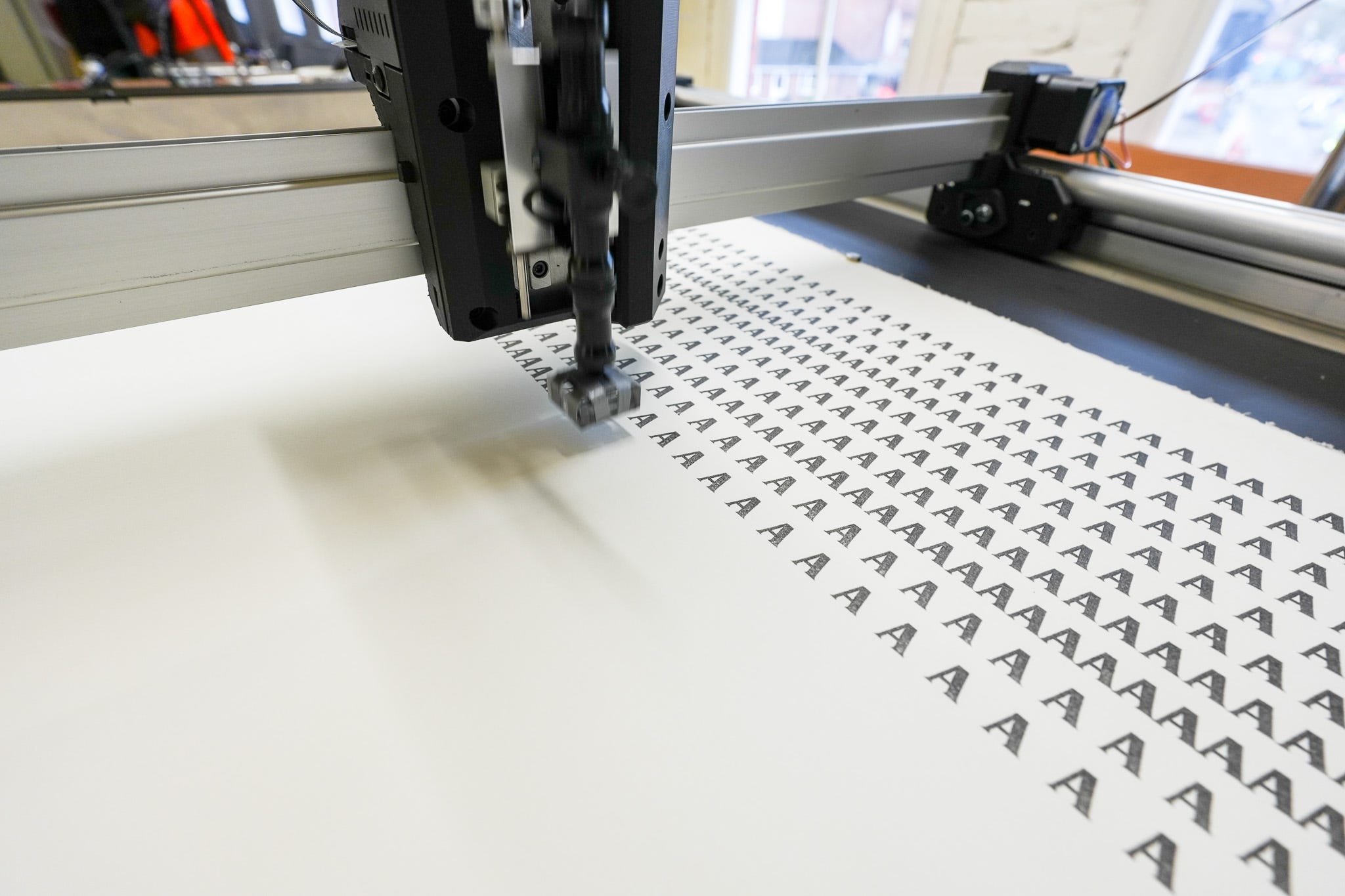
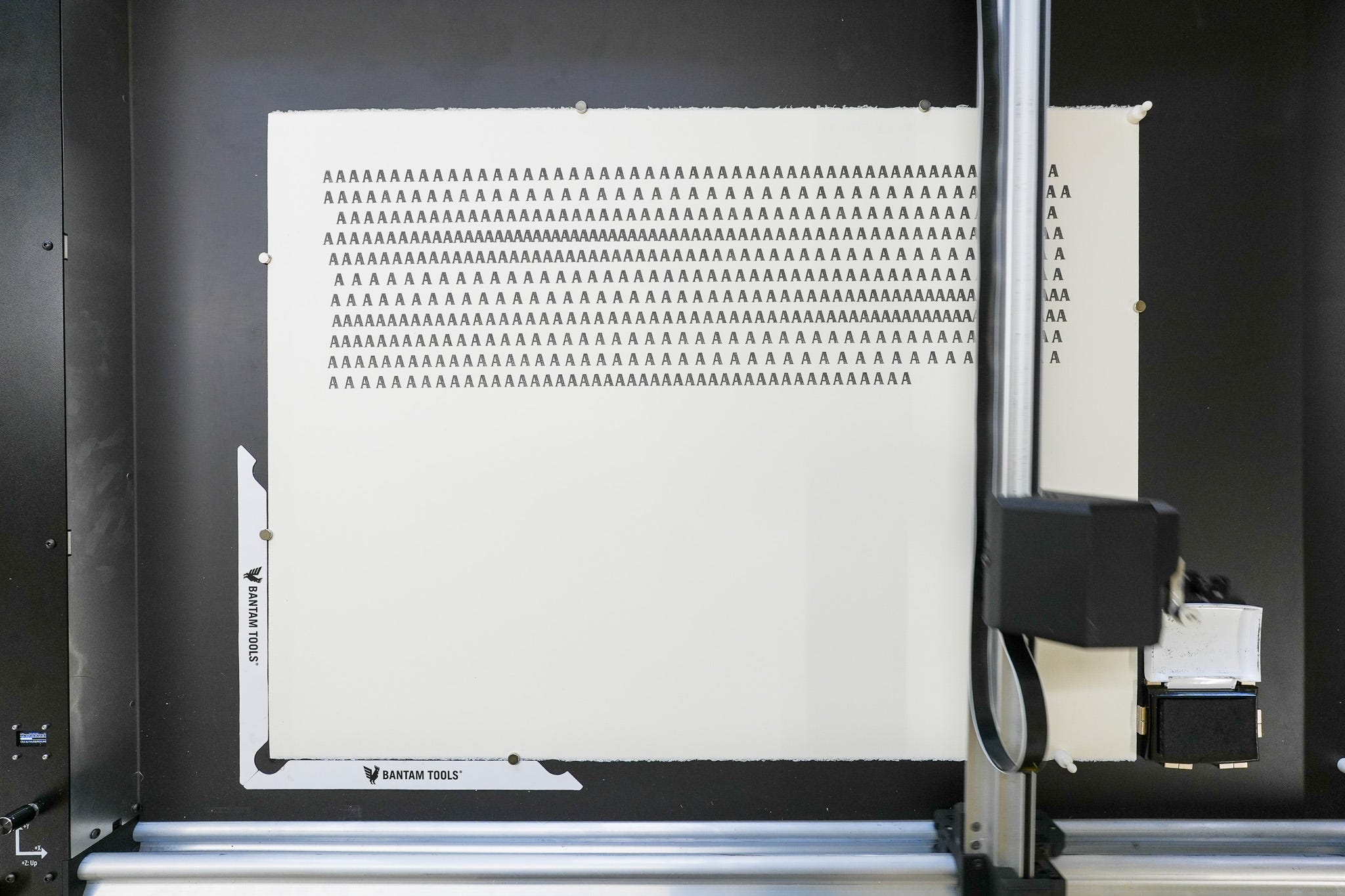
Which is a kinda chill video about using the Bantam Tools ArtFrame as a rubber stamping machine. I’ve had the new drawing machine from Bantam Tools for about three weeks now, so this is the first time in a newsletter.
One big different between this machine and the more typical Axi/NextDraw penplotter, is that you have to feed this one GCODE instead of an SVG file. Which in turn means you have access to setting the height (z-height) of the pen holder. So my first thought when getting it was “Hey, I can stick a rubber stamp stamper in there”.
So I did…
## ENTERING THE DANGER ZONE
Now, pen plotting machines are pretty good at protecting themselves, if, you use the software provided.
With the Axi/NextDraw you ask it “Hey please plot this SVG” and if the design is too large it’ll just refuse and let you know why. But, you can talk to the machine directly, and if you tell it to draw 20 meters, or 20km in one direction it’ll give it a go. It’ll fail, obviously, and probably make horrendous noises while it tries.
As I said, the software saves you, for the ArtFrame you have the Bantam Tools Studio, which looks a little like this…

Once again it’ll save your from yourself, here my design goes over the margins and off the edge of the page. When I ask it to export the GCODE it’ll handily clean that up for me and crop anything that goes out-of-bounds.
The problem I had with the rubber stamp is that I wanted the machine to stamp directly down onto the paper and back up again, no moving along a sideways, no drawing a line. I didn’t want it to move even slightly.
Which limits the ability to create an SVG file, which I want to just move somewhere, stamp, move somewhere else, stamp, move to the ink pad, move somewhere, stamp and so on.
No, you have to write that in it’s native language of GCODE, which means the safety-checking-net of software is gone. And with the ArtFrame you have the exciting opportunity to fuck your machine up in a whole new 3rd dimension!
I could mix up mm and cm and tell it to try and lift a pen far too high, or worse, set it too low where the mechanism will attempt to ram with as much force as possible whatever it’s holding through the base board, fun!!
So with all this in mind I went about writing the code needed to turn the ArtFrame into a stamping machine. Starting with creating the first bit of the GCODE…

Pretty easy, the only thing it really needs to know is the width and the height. For us we can generally ignore everything else.
The next bit of code is four handy functions which tell the machine to do various things, the first is to go park the “pen” holder at 0,0 and waiting for us to change the “tool”.
The second and third ‘ink’ and ‘stamp’ are virtually the same. They tell the machine to lift the “pen” up, move to the x,y position, move down to either the ink height, or stamping height, and then return to the upright position.
We need those two different heights because otherwise when it goes to ink the rubber stamp it tries pushing all the way down through the ink pad to the surface underneath 😬
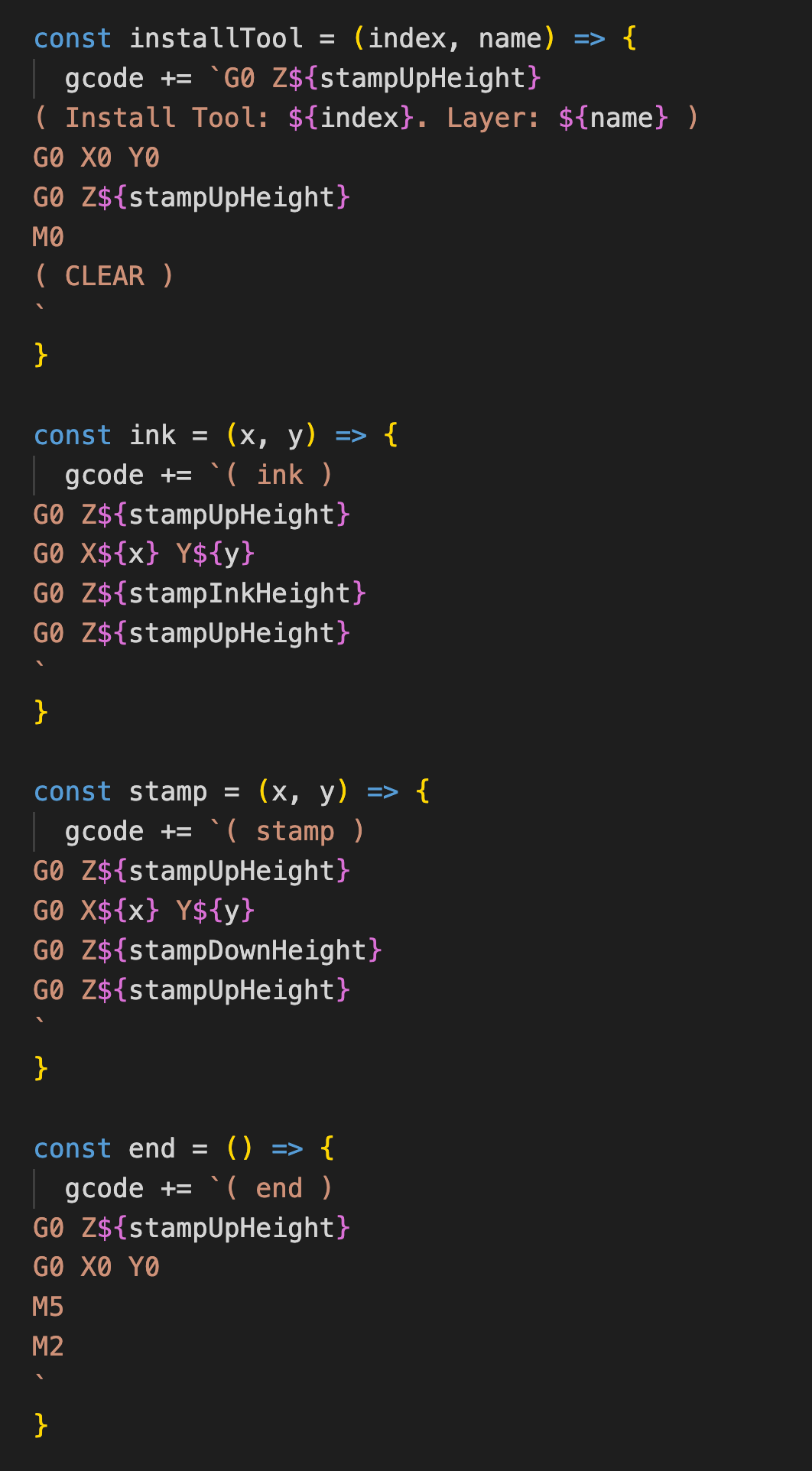
The final ‘end’ function moves the stamp up, returns it to 0,0 and wraps things up with whatever ‘M5’ and ‘M2’.
So as you can (hopefully) see writing GCODE for the ArtFrame isn’t particularly tricky.
Meanwhile this bit of code lets the rest of it know where the ink pad is, and the various borders and heights.
The values I figured out by trial and error, starting with high numbers and lowering them until the stamp was just about hitting the surfaces but not too much.

The bit that kind of ties it altogether is here, which is then looping through an array of stamps we’ve previously created, and calls the various functions to tag on their bit of GCODE to the whole thing, which is saves at the end.

I’ll hand wave over this a little bit, but we stamp all the letters of one type first, then the next letter and so on, so if we were doing ‘NOTES’ we’d stamp all the ones that match ‘N’, then ‘O’ and ‘T’, etc.
We’re doing a little bit of randomisation when inking the rubber stamp to make sure we aren’t just hitting the ink pad in the same location over and over again.
The last bit is just drawing some rectangles onto a canvas object so I can vaguely preview the output.
BTW, all the code lives here: https://github.com/revdancatt/stompy-stamper
I’m not saying it’s good code, but it hopefully answers the question “Hey, I already code my own SVG files, how much harder is it to code GCODE?”, with a “Pretty simple”.
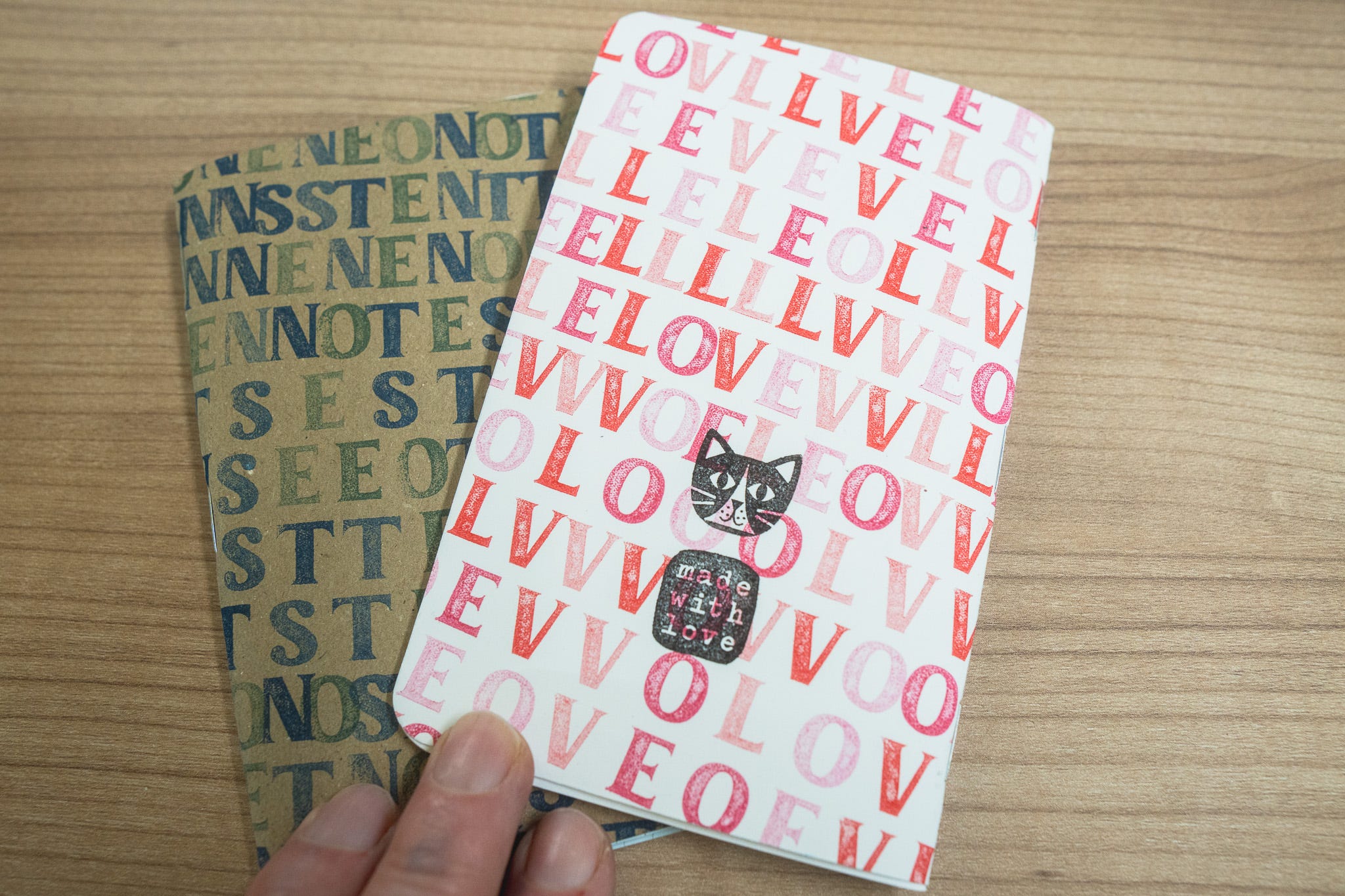
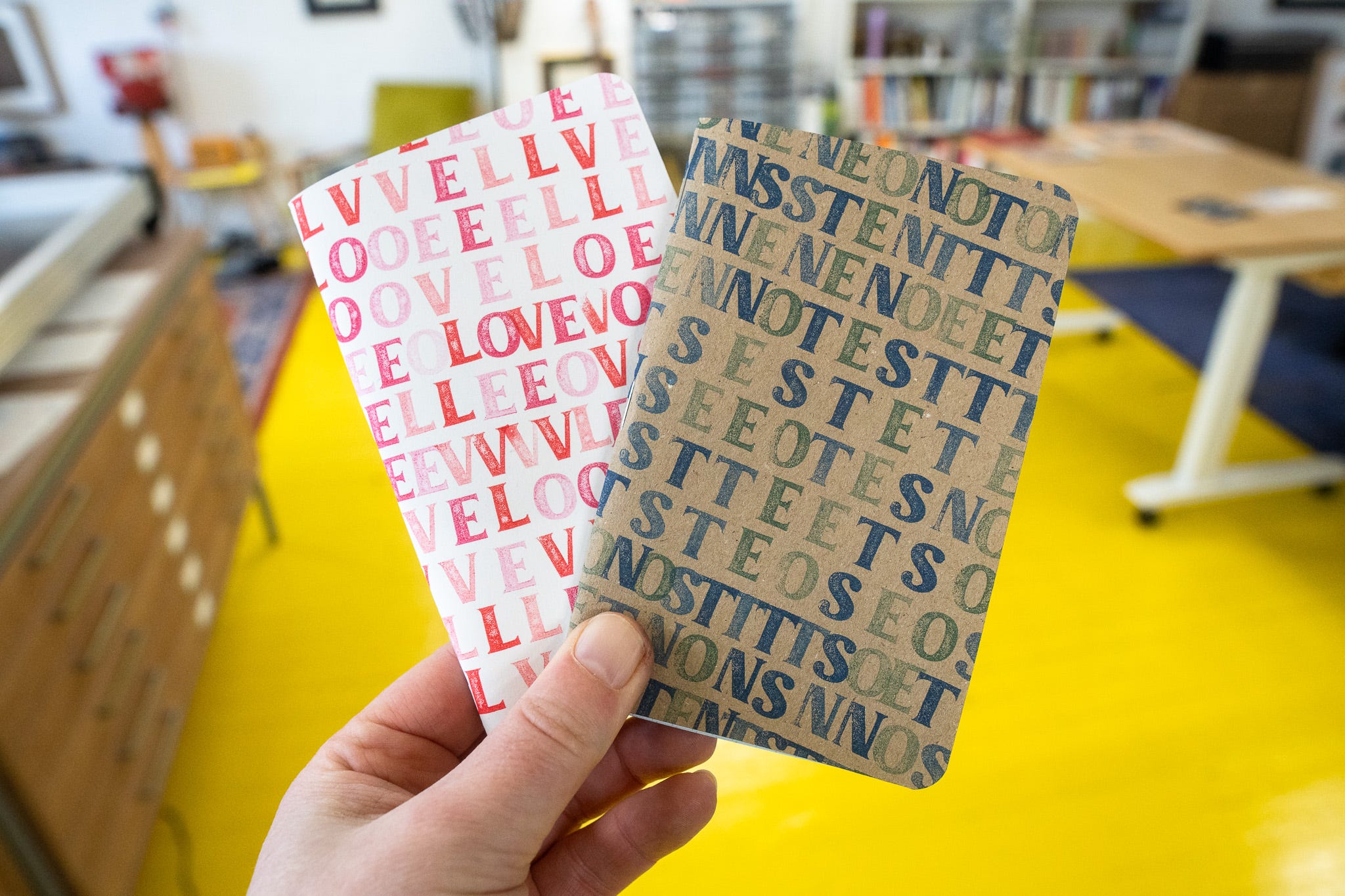
For this first project I was re-covering some notes books for Valentine's Day, so while the letters are randomly selected from the words “LOVE” and “NOTES”, I made sure the actual word always appeared roughly in the top half of the front cover.
‘Cause I’m clever like that 😁 - speaking of which.
# ZEN AND THE ART OF PEN PLOTTING
It may not surprise you to know that as well as keeping a journal I also keep an “Commonplace Book” where I write down notes and quotes so I can not-quite remember them properly later.
One of those is from Eckhart Tolle[1] where he’s talking about how it’s unwise to label things, it goes roughly…
“…in this way [labelling things], cleverness my be granted, but wisdom is lost, and so are joy, creativity and aliveness.”
Which is something about, I dunno, you discover a new thing, and the moment you think you know it and apply a label you’re restricting your possible understanding of, idk, the interconnectedness of everything. Maybe.
tbh, while I appreciate all the spiritualness of it, I’m far too busy. Quite possibly too busy missing the point, anyway, it made me think about this.
When we call a pen plotter a “Pen Plotter” we’re labelling it. Defining the thing, etc. etc. But people paint with them, embroider with them, some ne're do wells even tattoo with them, they’re not just for plotting with a pen.
Which is why I generally like to call them “Drawing Machines” - which is still labelling them, clever me.
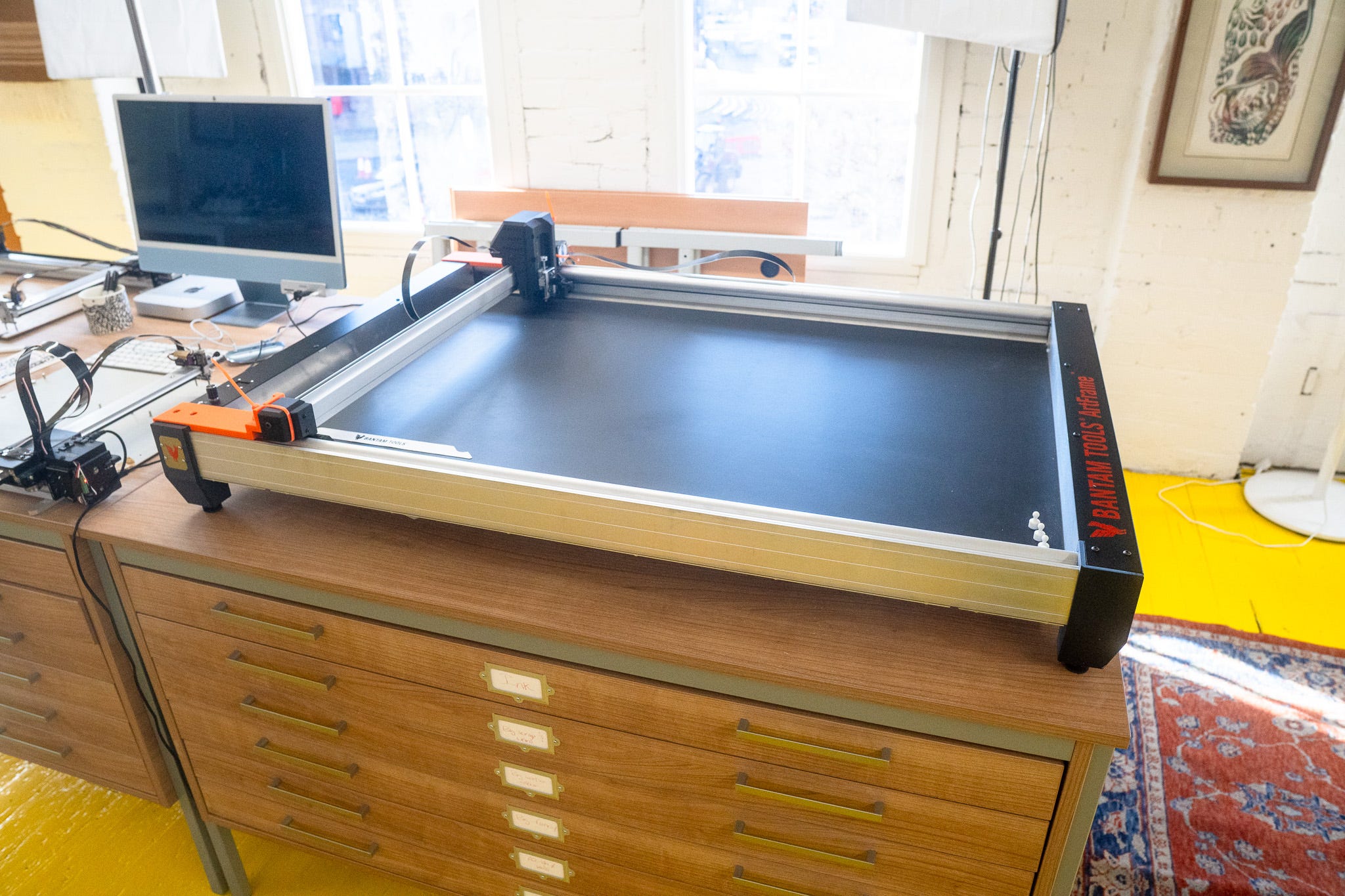
So when the ArtFrame arrived, I was somewhat delighted, in that it did indeed feel like a frame, in which art is created. I don’t so much as think of it as a pen plotter that I happen to be using to stamp rubber stamps, but rather a creative space in which, something can happen.
I’m not sure how intentional that was, I suspect there’s a load of marketing behind that name too, and a friendly way of getting it into museums and galleries. But I did enjoy how it brought the Tolle quote back to mind.
Less labelling things, more creativity and joy.
# THE END
Substack is shouting at me once again that I’ve reached the email length limit!
I’ll see you again on 6th March 2025.
Love you all
Dan
❤️
[1] I’ve taken to googling people’s names now just before I post quotes from them, just to check to see if there’s any recent controversy, I think Eckhart is generally fine (for now).